
Planning
Planning for the heat & rain!
Your essential guide to preparing for the British weather on your wedding day
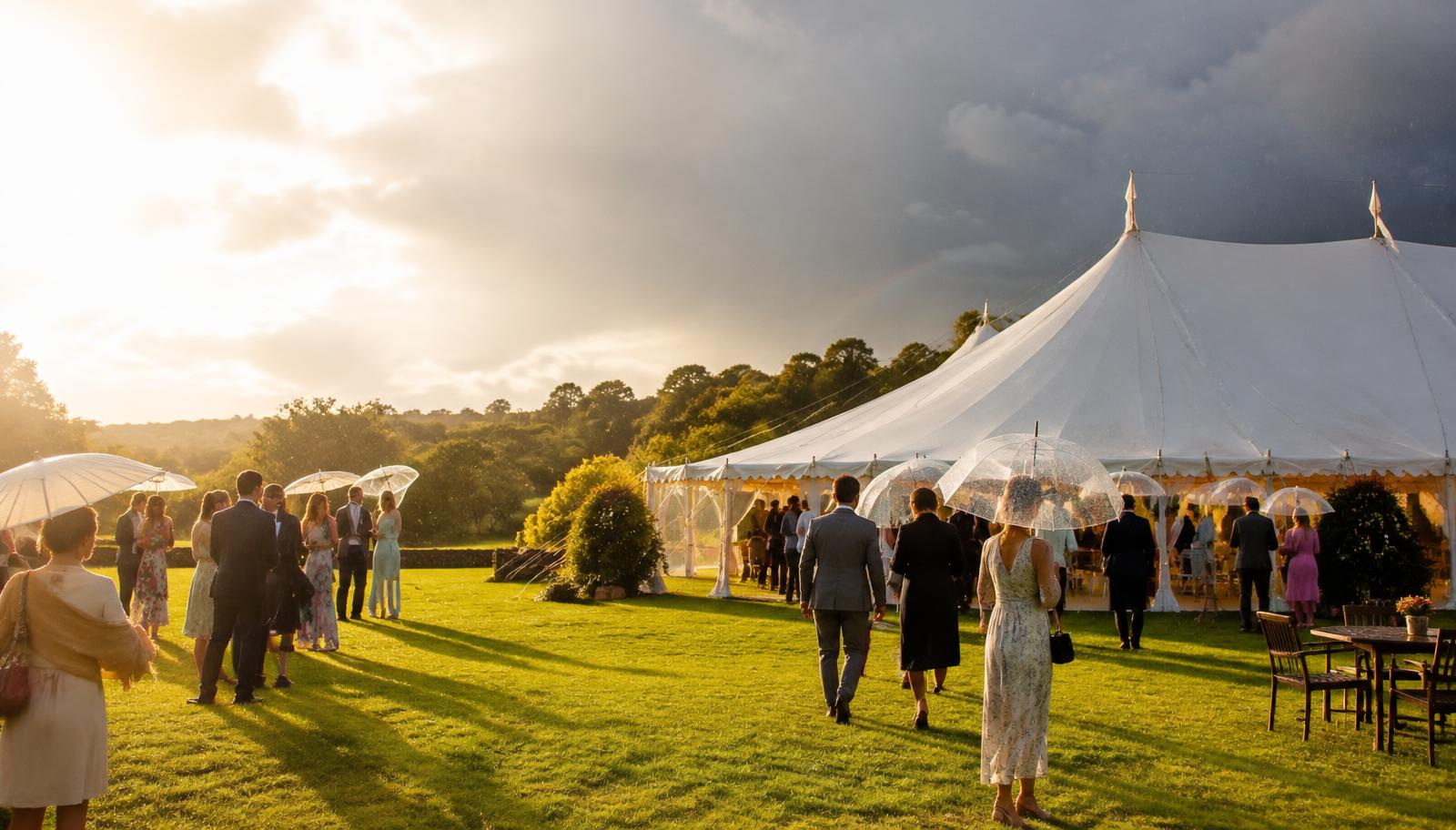
You've chosen your perfect venue, booked the suppliers and imagined the beautiful sunshine as you exchange your vows.
Then you remember one small detail.
You're getting married in Britain!
Whether you're planning a summer garden wedding, a spring celebration or a romantic autumn ceremony, the weather can be unpredictable.
But rain, sunshine, wind or chilly temperatures don't have to spoil your day.
With some thoughtful preparation, you can enjoy a wonderful wedding whatever the forecast.
1. Always Have a Plan B
If you're planning any part of your wedding outdoors, your first priority should be a reliable alternative.
Ask your venue:
- Is there an indoor ceremony option?
- Can the drinks reception move inside?
- Will everyone fit comfortably if the weather changes?
- Who makes the decision to move indoors?
- How quickly can the change happen?
- Are there additional charges?
It's particularly important to confirm that any alternative ceremony location is suitable for your legal ceremony.
Our tip: Don't simply ask whether the venue has a wet-weather plan. Ask to see exactly how it would work with your guest numbers.
2. Preparing for a Hot Wedding Day
British summers can produce surprisingly high temperatures.
If you're planning a July or August wedding, think carefully about guest comfort.
Provide plenty of water
Make chilled water easily available throughout the day, particularly during outdoor ceremonies and drinks receptions.
Attractive water dispensers with fruit and herbs can complement your wedding styling.
Create shaded areas
Parasols, covered seating and shaded garden areas give guests somewhere comfortable to escape the sunshine.
Think particularly about older guests, young children and anyone sensitive to heat.
Consider your ceremony time
An outdoor ceremony during the hottest part of the afternoon may be uncomfortable.
Discuss timings and the position of the sun with your venue.
Keep flowers and food cool
Fresh flowers, chocolate decorations, cakes and certain foods can deteriorate quickly in hot conditions.
Ask your florist and caterer about suitable storage and display arrangements.
Don't forget the wedding party
Make sure there's drinking water, somewhere cool to prepare and enough time for photographs without everyone overheating.
3. What If It Rains?
Rain doesn't automatically mean disaster.
Some of the most beautiful wedding photographs are taken on rainy days.
The secret is being prepared.
Have umbrellas ready
A collection of attractive umbrellas can be useful for guests and the wedding party.
Choose colours that complement your theme.
Protect your walkways
Grass can quickly become muddy.
Temporary walkways, matting or suitable flooring can make a significant difference, particularly for marquees and outdoor catering areas.
Protect your entertainment
Musicians, DJs and electrical equipment need appropriate shelter.
Never assume outdoor equipment can simply continue operating in wet conditions.
Think about photographs
Discuss alternative photography locations with your photographer.
Covered entrances, attractive indoor spaces and sheltered gardens can provide wonderful opportunities.
Allow extra time
Rain can slow down guest movements, photography and supplier setup.
Build some flexibility into your schedule.
4. Don't Forget the Wind!
Wind is often overlooked when planning an outdoor wedding.
But even a moderately windy day can cause problems with decorations, signs, table arrangements and temporary structures.
Consider:
- Securing lightweight decorations.
- Avoiding unstable freestanding signs.
- Choosing suitable floral arrangements.
- Protecting microphones from wind noise.
- Checking arrangements for marquees and gazebos.
- Having an alternative to outdoor candles.
Important: Marquees and temporary structures must be installed and assessed by competent suppliers. Follow their guidance on wind limits and evacuation procedures.
5. Insects and Outdoor Weddings
Summer weddings can attract a few unexpected guests!
Wasps, flies and mosquitoes can become a nuisance, particularly around food and drinks.
Simple precautions include keeping food covered where appropriate, clearing empty glasses promptly and positioning bins away from dining areas.
If you're getting married near water or woodland, consider making suitable insect repellent available.
Avoid placing strongly scented products near food, and speak to your caterer about insect management.
6. Sunset Times Matter
Beautiful sunset photographs can be one of the highlights of a wedding.
However, sunset times vary dramatically throughout the year and across the UK.
A June wedding may enjoy daylight well into the evening, while a December wedding can become dark during the afternoon.
This affects:
- Wedding photography.
- Outdoor ceremonies.
- Drinks receptions.
- Garden entertainment.
- Lighting requirements.
- Guest movement around the venue.
Check the sunset time for your exact location and date.
Our tip: Ask your photographer to build any golden-hour photographs into your wedding schedule.
7. Think About Your Guests
A comfortable guest is usually a happy guest.
For summer weddings, consider water, shade, sunscreen and seating.
For colder celebrations, think about heating, covered walkways, warm drinks and somewhere to leave coats.
Guests with mobility requirements may need particular consideration if outdoor surfaces become wet or uneven.
8. Wedding Insurance: What's Actually Covered?
Wedding insurance can provide valuable financial protection, but policies differ considerably.
Depending on the policy, cover may be available for certain cancellations, supplier failures, damaged wedding items or other specified circumstances.
However, ordinary rain or disappointing weather does not automatically mean you can claim.
Some policies exclude particular weather events or require specific conditions to be met.
Before purchasing insurance, check:
- What weather-related circumstances are covered.
- Whether cancellation or rearrangement is included.
- What happens if a venue becomes inaccessible.
- Whether supplier failure is covered.
- The excess and maximum claim limits.
- Any exclusions or booking conditions.
Always read the policy wording carefully.
9. Create a Weather Decision Plan
One of the simplest ways to reduce stress is to agree who makes weather-related decisions.
For example:
One week before: Review forecasts and discuss potential changes with suppliers.
48 hours before: Confirm contingency arrangements and decision deadlines.
The day before: Check updated forecasts and prepare any additional equipment.
On the day: Allow your venue coordinator or wedding planner to implement the agreed plan.
This avoids last-minute confusion and means you can concentrate on enjoying your wedding.
The Perfect Wedding Doesn't Depend on Perfect Weather
Sunshine is lovely, but it's not what makes a wedding special.
The people, atmosphere, laughter and memories matter far more.
A little planning can transform unexpected weather from a potential problem into a minor inconvenience.
And sometimes, the unexpected moments become the stories everyone remembers.
Planning an outdoor wedding?
Discover experienced marquee companies, wedding planners, venues, caterers, photographers and equipment suppliers through our Surrey Events 250 directory.
The right professionals can help you prepare for almost anything the British weather throws your way.